
When a severe storm passes, most home and business owners focus on obvious damage like fallen trees, roof leaks, or flooded basements. One of the most common and expensive problems, however, often goes unnoticed until later: damaged electronics.
From computers and TVs to audio equipment and smart home devices, modern electronics are highly sensitive to electrical disturbances that frequently occur during storms.
Power Surges
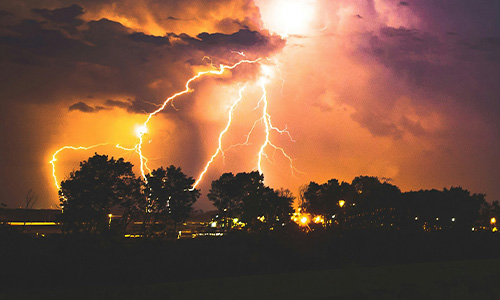
Lightning doesn’t have to strike your home or office building directly to cause damage. A nearby lightning strike can send a powerful electrical surge through utility lines of up to 6,000 volts/3,000 amps. Lightning can also induce current on wires via its magnetic field without directly striking the line. In some cases, the damage is immediate and you notice right away that a device has stopped working entirely. In other cases, the surge weakens internal circuits, causing intermittent issues that lead to failure weeks or even months later.
Repeated Power Interruptions Take a Toll
Storms often cause multiple outages and rapid power restorations. Each interruption and restart places stress on electronic power supplies and internal components. Devices that experience repeated voltage fluctuations may develop problems such as:
- Unexpected shutdowns
- Flickering displays
- Reduced performance
- Data corruption
- Complete equipment failure
Hidden Damage Isn’t Always Immediate
Owners may assume their electronics are safe if they still power on after a storm. Unfortunately, internal damage isn’t always visible. Components weakened by a power line surge may continue operating temporarily before failing unexpectedly. This delayed failure often surprises people because the connection between the storm and the malfunction isn’t immediately obvious.
Which Electronics Are Most at Risk?
Nearly every plugged-in device can be affected, including:
- Televisions
- Desktop and laptop computers
- Audio Video Equipment
- Gaming consoles
- Wi-Fi routers and modems
- Smart home devices
- Medical devices
- Security systems
- And other electronics with microprocessors
How to Protect Your Electronics Before a Storm
Several steps can significantly reduce the risk of storm-related damage:
- Use high-performance series mode surge protectors for important electronics.
- Unplug sensitive devices when severe storms are expected, if it is safe to do so.
- Keep electronics away from areas prone to water intrusion.
- Back up important files regularly.
- Have suspected damaged equipment inspected before continued use.
What to Do After a Storm
If you notice electronics behaving unusually after severe weather, avoid ignoring the warning signs. Strange noises, burning smells, flickering screens, or random shutdowns may indicate internal damage.
Document any affected equipment, take photographs if appropriate, and contact your insurance provider if significant losses have occurred. A qualified electrician can inspect your home’s or office building’s electrical system for hidden surge damage.
Final Thoughts
Storm damage isn’t always visible. Electrical surges can silently reduce the lifespan of your electronics long before they stop working completely. Understanding these risks and taking preventive measures can save you from costly replacements and help keep your home and business devices protected the next time severe weather strikes.